


Hyderabad MMTS 2026: Complete Guide to Train Timings, Route Map, All Stations, Fares & Phase 2 Updates
Tags: Hyderabad MMTS, Hyderabad MMTS timings, Hyderabad MMTS map, Hyderabad MMTS route map, MMTS train timings Hyderabad, MMTS Phase 2, MMTS stations list, MMTS fare, South Central Railway Hyderabad, suburban train Hyderabad, MMTS Lingampally, MMTS Secunderabad, MMTS Falaknuma, MMTS Medchal
Introduction: Hyderabad's Unsung Urban Lifeline
Every morning, tens of thousands of Hyderabad residents quietly bypass the gridlock on NH-65, the ORR, and the arterial city roads — not by metro, not by cab, but by boarding one of the blue-and-white suburban trains that thread through the twin cities at a fraction of the cost of any other mode of transport. This is the Hyderabad MMTS — the Multi-Modal Transport System — and if you live, work, or invest in Hyderabad, it is one of the most important transit systems you need to understand.
The Hyderabad MMTS is a suburban rail system operated as a joint venture between the Government of Telangana and the South Central Railway (SCR), covering a 90-kilometre network with 44 stations and connecting Hyderabad, Secunderabad, Falaknuma, Lingampally, Medchal, and Umdanagar. As of December 2025, around 80 MMTS services are operated daily, carrying nearly 60,000 passengers a day.
Yet despite this scale, MMTS remains one of Hyderabad's most underappreciated transit assets — relatively unknown to newer residents, frequently confused with the Hyderabad Metro Rail, and rarely discussed with the depth it deserves. This guide by Assetscan.ai changes that. Whether you are a daily commuter looking for the fastest way between Lingampally and Secunderabad, a homebuyer evaluating MMTS-adjacent localities, or an investor tracking real estate trends along transit corridors — this is the most comprehensive guide to the Hyderabad MMTS you will find.
Hyderabad MMTS: Key Facts at a Glance
| Parameter | Details |
|---|---|
| Full Form | Multi-Modal Transport System |
| Operator | South Central Railway (SCR) |
| Joint Venture Partner | Government of Telangana |
| Launch Date | August 9, 2003 |
| Network Length | 90 km (as of April 2023) |
| Total Stations | 44 stations |
| Active Services (2025) | ~80 services/day |
| Daily Ridership | ~60,000 passengers/day |
| Classes | General, First Class, Ladies Special |
| Ticketing | Computerised counters + ATVM machines |
| Passes | TSRTC–MMTS Combined Monthly Pass |
| Phase 2 Launch | April 8, 2023 (PM Modi inauguration) |
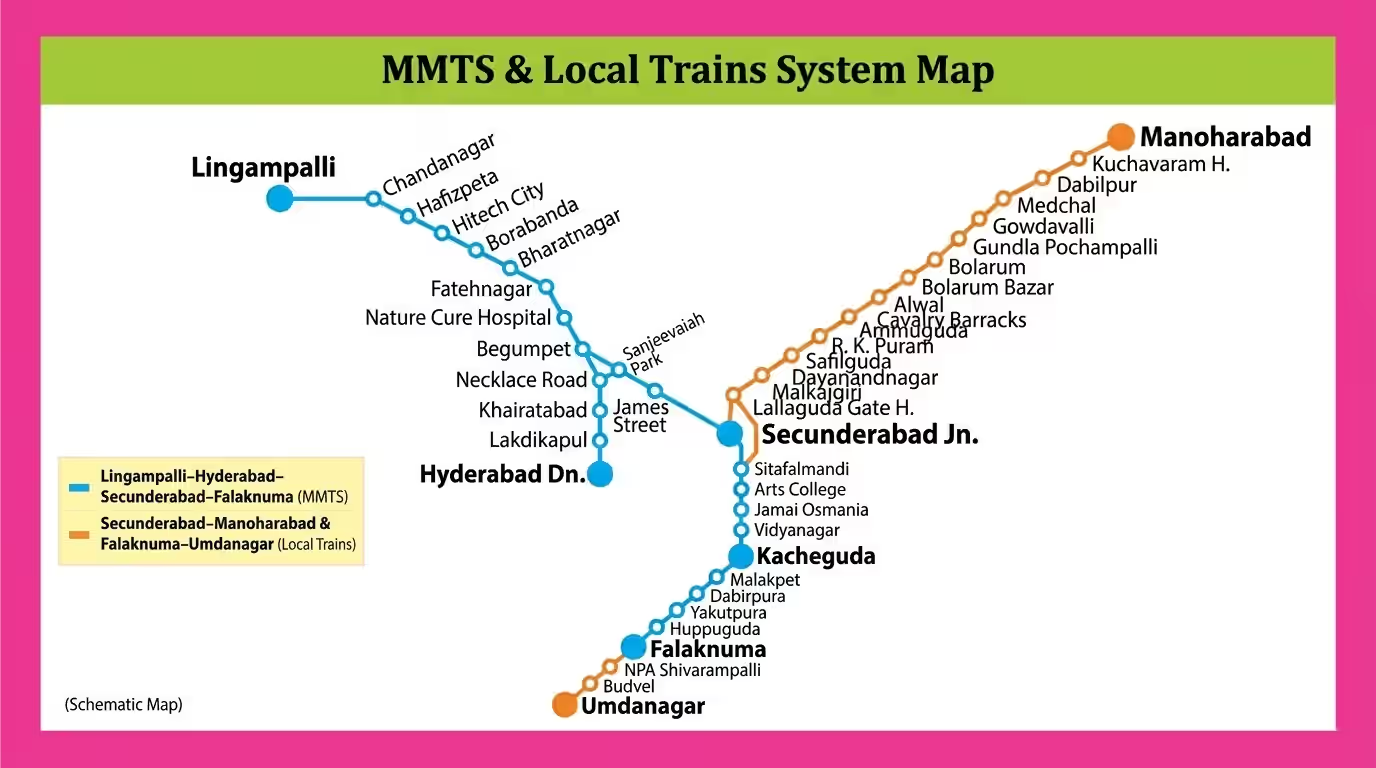
Hyderabad MMTS Route Map: All 6 Active Routes Explained
The Hyderabad MMTS network operates on six routes, covering 44 stations across 90 km, connecting localities across Hyderabad and suburban areas such as Falaknuma, Medchal, Umdanagar, Secunderabad, and Lingampally.
Understanding the six routes is the foundation of using MMTS efficiently. Here is a detailed breakdown of each:
Route 1: Lingampally ↔ Hyderabad (Nampally/Deccan)
This is the most popular and busiest MMTS route, cutting across the western IT corridor directly into the heart of central Hyderabad. It is the route of choice for IT professionals living in Lingampally, Chandanagar, BHEL, and Hafeezpet who work in HITEC City, Begumpet, and the central business district.
Key stations on this route: Lingampally → RC Puram → Bharat Nagar (BHEL) → Tellapur → Hafeezpet → Borabanda → Hitech City → Begumpet → James Street → Secunderabad → Sitafalmandi → Vidyanagar → Kacheguda → Malakpet → Dabirpura → Yakutpura → Hyderabad (Nampally/Deccan)
Highlights: The Hitech City halt on this route makes it exceptionally useful for software industry commuters. It is often the fastest way to get from western suburbs to central Hyderabad without enduring the notoriously congested Madhapur and Jubilee Hills stretch.
Route distance: ~29 km
Route 2: Lingampally ↔ Falaknuma (via Secunderabad)
The longest route in the MMTS network, this line traverses the entire city — from the western end at Lingampally all the way to Falaknuma in the old city south. It is particularly useful for residents of the old city who work in HITEC City or the western corridor, offering a single-train option instead of multiple bus changes.
The Lingampally–Falaknuma–Umdanagar and Umdanagar–Falaknuma–Lingampally routes are the longest routes on Hyderabad MMTS. Mmts
Key stations: Lingampally → Hafeezpet → Borabanda → Hitech City → Begumpet → Secunderabad → Sitafalmandi → Vidyanagar → Kacheguda → Malakpet → Dabirpura → Yakutpura → Huppuguda → Falaknuma
Route distance: ~44 km (full end-to-end)
Route 3: Lingampally ↔ Secunderabad
A truncated, faster version of Route 2 that stops at Secunderabad rather than going all the way to Falaknuma. Ideal for commuters whose origin or destination is Secunderabad Junction or the areas around it — the city's largest railway interchange.
Key stations: Lingampally → Hafeezpet → Borabanda → Hitech City → Begumpet → James Street → Secunderabad
Route 4: Secunderabad ↔ Falaknuma
This route serves commuters between Secunderabad and the old city, traversing through some of Hyderabad's most densely populated historic areas including Kacheguda, Malakpet, and Dabirpura.
Key stations: Secunderabad → Sitafalmandi → Arts College → Jamai Osmania → Vidyanagar → Kacheguda → Malakpet → Dabirpura → Yakutpura → Huppuguda → Falaknuma
Route 5: Secunderabad ↔ Medchal (via Bolarum) — Phase 2
On April 8, 2023, 13 MMTS services along with 2 other routes under MMTS Phase II between Secunderabad–Bolarum–Medchal with a distance of 28 km were inaugurated by Prime Minister Narendra Modi. This route was years in the making and significantly extends MMTS coverage northward into Medchal, a rapidly growing suburb.
Key stations: Secunderabad → Lalaguda → Mettuguda → Nustulapur → Bolarum → Alwal → Medchal
Significance: This route is a major connectivity booster for residents of Alwal, Bolarum, and Medchal — previously underserved areas that relied entirely on road transport. It also opens up new real estate corridors in Medchal to transit-linked investment.
Route 6: Falaknuma ↔ Umdanagar — Phase 2
The extension from Falaknuma to Umdanagar with a distance of 12 km was also inaugurated as part of the Phase 2 launch on April 8, 2023. This route connects the old city's southern tip at Falaknuma to Umdanagar via Kacheguda, providing suburban rail access to commuters heading toward Shamshabad.
Additional new services (Oct 2023): With the commencement of the new timetable on October 1, 2023, South Central Railway introduced six new MMTS services connecting Medchal to Lingampalli, Medchal to Hyderabad, and Medchal to Lingampalli, aiming to benefit suburban travellers. Additionally, six new MMTS services were launched between Umdanagar–Secunderabad and Falaknuma–Secunderabad.
Hyderabad MMTS Train Timings: Route-Wise Schedule (2026)
One of the most searched queries about MMTS is train timings. Here is a comprehensive breakdown of MMTS train timings across key routes. Note that timings are subject to revision by South Central Railway — always cross-check with the official SCR website or the HYLITES app before travel.
Hyderabad (Deccan) to Lingampally — Train Timings
Scheduled departures from Hyderabad run between 5:10 AM and 4:25 PM, with returns from Lingampally running from 9:55 AM to 6:10 PM.
Key departure times from Hyderabad (Deccan/Nampally) towards Lingampally:
| Train No. | Departure (Hyderabad) | Arrival (Lingampally) |
|---|---|---|
| 47100 (HL1) | 05:10 AM | 05:50 AM |
| 47101 (HL2) | 06:00 AM | 06:40 AM |
| 47103 | 07:15 AM | 07:55 AM |
| 47105 | 08:30 AM | 09:10 AM |
| 47107 | 09:45 AM | 10:25 AM |
| 47109 | 11:00 AM | 11:40 AM |
| 47111 | 12:15 PM | 12:55 PM |
| 47113 | 01:30 PM | 02:10 PM |
| 47115 | 02:45 PM | 03:25 PM |
| 47117 | 04:00 PM | 04:40 PM |
Note: Some midday services (11 AM–3 PM) are curtailed on Sundays. Always confirm Sunday schedules separately.
Lingampally to Hyderabad — Train Timings
Key departures from Lingampally towards Hyderabad (Deccan):
| Train No. | Departure (Lingampally) | Arrival (Hyderabad) |
|---|---|---|
| 47102 | 09:55 AM | 10:35 AM |
| 47104 | 11:10 AM | 11:50 AM |
| 47106 | 12:25 PM | 01:05 PM |
| 47108 | 01:40 PM | 02:20 PM |
| 47110 | 02:55 PM | 03:35 PM |
| 47112 | 04:10 PM | 04:50 PM |
| 47114 | 05:25 PM | 06:05 PM |
| 47116 | 06:10 PM | 06:50 PM |
Falaknuma to Lingampally — Train Timings
Train No. 47149 (FL1) departs Falaknuma at 05:00 AM and reaches Lingampally. Train No. 47150 (FL2) departs Falaknuma at 05:40 AM, reaching Lingampally at 06:12 AM. Note: Train 47150 does not operate on Sundays.
| Train No. | Departure (Falaknuma) | Notes |
|---|---|---|
| 47149 (FL1) | 05:00 AM | Runs daily |
| 47150 (FL2) | 05:40 AM | Does not run Sundays |
| 47153 | 07:20 AM | Peak hour service |
| 47155 | 09:00 AM | Regular service |
| 47157 | 10:45 AM | Regular service |
| 47159 | 12:30 PM | Curtailed Sundays |
| 47161 | 02:15 PM | Regular service |
| 47163 | 04:00 PM | Regular service |
| 47165 | 05:45 PM | Evening peak |
| 47167 | 07:30 PM | Evening service |
First and Last MMTS Trains — Quick Reference
| Route | First Train | Last Train |
|---|---|---|
| Hyderabad → Lingampally | 05:10 AM | 04:25 PM |
| Lingampally → Hyderabad | 09:55 AM | 06:50 PM |
| Falaknuma → Lingampally | 05:00 AM | ~09:30 PM |
| Lingampally → Falaknuma | 05:32 AM | ~10:00 PM |
| Lingampally → Umdanagar | 04:00 AM | — |
| Falaknuma → Umdanagar | 11:15 PM | Overnight run |
Train No. 47213 LPI–UR departs from Lingampalli at 04:00 AM, arriving at Kachiguda at 05:00 AM and Umdanagar at 05:40 AM. Train No. 47220 FM–LPI departs Falaknuma at 23:15, arriving at Kachiguda at 23:29/23:30, and reaching Umdanagar at 00:45 AM.
Pro Tip: Some services running between 11 AM and 3 PM are cancelled on Sundays. Always check the MMTS timetable before planning your Sunday journey.
Complete Hyderabad MMTS Stations List
The MMTS service presently covers 44 stations across the twin cities of Hyderabad and Secunderabad. Here is the complete stations list, route-wise:
Western Line Stations (Lingampally ↔ Hyderabad/Secunderabad)
Lingampally → RC Puram → Bharat Nagar (BHEL) → Tellapur → Hafeezpet → Borabanda → Hitech City (Madhapur) → Sanjeevaiah Park → James Street → Secunderabad Junction
Secunderabad ↔ Hyderabad (Deccan/Nampally) Line
Secunderabad → Sitafalmandi → Arts College → Jamai Osmania → Vidyanagar → Kacheguda → Malakpet → Dabirpura → Yakutpura → Huppuguda → Hyderabad Deccan (Nampally)
Secunderabad ↔ Falaknuma Line
Secunderabad → Sitafalmandi → Arts College → Jamai Osmania → Vidyanagar → Kacheguda → Malakpet → Dabirpura → Yakutpura → Huppuguda → Falaknuma
Northern Line — Phase 2 (Secunderabad ↔ Medchal via Bolarum)
Secunderabad → Lalaguda → Mettuguda → Nustulapur → Bolarum (Bolarum Junction) → Alwal → Medchal
Southern Extension — Phase 2 (Falaknuma ↔ Umdanagar)
Falaknuma → Kacheguda → Umdanagar
Begumpet–James Street Corridor (Intermediate Stations)
Begumpet → Nature Cure Hospital → Rasool Pura (James Street) → Sanjeevaiah Park
Key Interchange Station: Secunderabad Junction — This is the largest and most important interchange on the entire MMTS network, connecting all major routes. Passengers can transfer between MMTS lines, mainline trains (to Chennai, Mumbai, Delhi, Bengaluru), and city buses at Secunderabad.
Second Major Interchange: Kacheguda — Connects the Falaknuma/old city line with the Umdanagar extension and mainline services to Bengaluru via the Kacheguda–Yesvantpur Vande Bharat Express.
 Share Preferences
Hyderabad MMTS Fare Chart: The Cheapest Train Ride in the City
One of the MMTS's most compelling advantages is its extraordinarily affordable fare structure. General class fares are structured as follows: 0–10 km costs ₹5; 10–15 km costs ₹6; 15–20 km costs ₹7; 20–25 km costs ₹8; 25–30 km costs ₹9; 30–35 km costs ₹10; and 35–40 km costs ₹11. First Class fares are approximately 12 times the General fare per single journey.
| Distance Slab | General Class | First Class (approx.) |
|---|---|---|
| 0 – 10 km | ₹5 | ₹60 |
| 10 – 15 km | ₹6 | ₹72 |
| 15 – 20 km | ₹7 | ₹84 |
| 20 – 25 km | ₹8 | ₹96 |
| 25 – 30 km | ₹9 | ₹108 |
| 30 – 35 km | ₹10 | ₹120 |
| 35 – 40 km | ₹11 | ₹132 |
To put this into context: a complete end-to-end journey from Lingampally to Falaknuma — covering approximately 44 km across Hyderabad — costs a commuter around ₹11 in General class. The same journey by cab or rideshare would cost ₹350–₹600 depending on time of day and traffic. MMTS essentially delivers city-crossing commutes at nearly zero marginal cost.
TSRTC–MMTS Combined Monthly Pass
A combined RTC–MMTS pass costs ₹700–₹800 per month, allowing travel in ordinary city buses as well as MMTS General category trains. This is one of the best-value transit passes in any Indian city — enabling unlimited bus and train travel across Hyderabad for less than the cost of a single weekend dinner.
ATVM (Automatic Ticket Vending Machines)
All MMTS stations are computerised for issuing MMTS tickets and general tickets, with reservation counters also available. SCR has introduced ATVM machines for MMTS and general tickets. The UTS (Unreserved Ticketing System) app launched by Indian Railways also allows digital ticket booking, making MMTS increasingly accessible for tech-savvy commuters.
Hyderabad MMTS Travel Classes and Train Composition
Every MMTS train consists of multiple coaches offering different travel classes:
General Class: The most widely used class, offering basic but clean seating and standing room. Ideal for short to medium distance commutes. Fares as listed above.
First Class: Air-conditioned coaches with reserved seating. At approximately 12 times the General fare, First Class is primarily used by professionals and long-distance MMTS commuters who prioritise comfort on the 44–90 minute journeys.
Ladies Special (Matrubhumi Express): SCR introduced a ladies special train on the Falaknuma–Lingampally route on September 28, 2011 — the MMTS Matrubhumi Ladies Special — featuring 9-coach trains exclusively for women commuters. This service was a pioneering step for women's safety in public transit and continues to operate, though utilisation has been mixed.
Vendor Compartments: Dedicated coaches for small vendors and traders, recognising the economic reality that many MMTS users are market vendors and micro-entrepreneurs who transport goods between city markets.
Hyderabad MMTS Phase 2: What Happened, When, and What's Next
No discussion of the Hyderabad MMTS is complete without addressing the long and tortuous saga of Phase 2 — a project that was announced, delayed, revised, partially completed, and still has significant proposed extensions pending.
The Phase 2 History
In May 2010, Indian Railways decided to adopt the MMTS Phase II project covering 104 km at an estimated cost of ₹641 crore. The Railway Board approved the second phase after the state government agreed to fund two-thirds of its cost. It was expected to be completed by 2018 and was projected to handle 300,000 passengers a day.
The project faced repeated delays due to funding disputes between the state government and Indian Railways, land acquisition challenges, engineering difficulties in urban rail construction, and the disruption caused by Andhra Pradesh's bifurcation into Telangana and Andhra Pradesh in 2014.
A 6-km stretch from Lingampally to RC Puram and a 12.5-km stretch from Bolarum to Medchal were scheduled to begin in March 2018, and the 12-km Moula Ali–Ghatkesar stretch was scheduled to open in July 2018, but both were delayed due to several reasons. Trial runs started on a few sections in August 2020.
Phase 2 Inauguration: April 8, 2023
On April 8, 2023, 13 MMTS services along with 2 other routes under MMTS Phase II — between Secunderabad–Bolarum–Medchal (28 km) and the extension from Falaknuma to Umdanagar (12 km) — were inaugurated by Prime Minister Narendra Modi, bringing the total network to 90 km and 44 stations.
This was a landmark moment. After 13 years of delays, Phase 2 finally became a reality — albeit a scaled-down version of the original 107-km vision. The inauguration by the Prime Minister added significant political and infrastructure visibility to the MMTS network and confirmed South Central Railway's commitment to maintaining and expanding suburban rail in Hyderabad.
Phase 2 New Routes Under MMTS Framework
The four new route expansions coming under MMTS Phase 2 include: Moulali to Ghatkesar (12.2 km) on the Secunderabad–Kazipet route with quadrupling and electrification; Secunderabad to Medchal via Bolarum with 14 km of doubling and electrification; Tellapur to Ramachandrapuram (5.75 km) restoring an old track; and Falaknuma to Umdanagar and Shamshabad Airport (20 km) on the Secunderabad–Bengaluru route.
The Tellapur to Ramachandrapuram extension is of particular interest to real estate investors and homebuyers in the western corridor, as it directly connects the MMTS network with Osman Nagar, Ramchandrapuram, and BHEL Township — areas experiencing significant growth following the recent TGIIC land auctions.
Proposed Future Expansions
Beyond the Phase 2 routes already inaugurated, several extensions remain under discussion:
- RC Puram Extension — Extending the Lingampally line further westward toward Ramchandrapuram and beyond
- Ghatkesar Extension — The Moula Ali–Ghatkesar corridor, which was part of the original Phase 2 plan, connecting eastern Hyderabad suburbs
- Shamshabad Airport Link — A proposed extension from Falaknuma through Umdanagar to Shamshabad Airport, which would provide a low-cost rail option to Rajiv Gandhi International Airport
- Patancheru Extension — Connecting Lingampally to Patancheru, serving the industrial belt northwest of Hyderabad
How to Read the Hyderabad MMTS Route Map
The Hyderabad MMTS route map can initially appear complex, but once you understand its logic, it becomes straightforward to navigate. Here are the key principles:
The Hub-and-Spoke Structure: Secunderabad Junction is the central hub. Almost all MMTS routes pass through or terminate at Secunderabad. If you are travelling between any two MMTS stations that are on different lines, you will almost always change at Secunderabad.
The Western Spoke: The Lingampally line runs west from Secunderabad through Begumpet, Hitech City, Hafeezpet, and Borabanda to Lingampally — covering the entire IT corridor.
The Southern Spoke: The Falaknuma line runs south from Secunderabad through Kacheguda, Malakpet, and Dabirpura to Falaknuma — covering the old city and Nizamabad road corridor.
The Northern Spoke (Phase 2): The Medchal line runs north from Secunderabad through Bolarum and Alwal to Medchal — covering the industrial and residential belt north of the city.
The Southern Extension (Phase 2): The Umdanagar line runs further south from Falaknuma to Umdanagar via Kacheguda.
For commuters planning daily travel, the most important stations to bookmark are: Secunderabad (main interchange), Kacheguda (south/old city access), Hitech City (IT corridor), Lingampally (western terminus), and Falaknuma (southern terminus).
Digital Maps: The HYLITES (Hyderabad Live Train Enquiry System) mobile app provides real-time MMTS station and train enquiry services. The UTS app by Indian Railways enables ticket purchase and timetable access. Both are available for Android and iOS.
MMTS vs. Hyderabad Metro Rail: Key Differences
Many Hyderabad residents are unclear about the distinction between the MMTS and the Hyderabad Metro Rail. They are fundamentally different systems:
| Feature | Hyderabad MMTS | Hyderabad Metro Rail |
|---|---|---|
| Operator | South Central Railway (Indian Railways) | L&T / HMRL (being acquired by Telangana govt) |
| Track Type | Existing Indian Railways tracks (at-grade) | Elevated dedicated metro tracks |
| Coverage | 90 km, 44 stations | ~71 km, 57 stations (Phase 1) |
| Fare Range | ₹5–₹11 (General) | ₹10–₹60 |
| Frequency | Less frequent (15–40 min gaps) | High frequency (5–10 min at peak) |
| Speed | Moderate (shares tracks with freight/mainline) | Faster (dedicated tracks, no signal conflicts) |
| Best For | Long suburban commutes, budget travel | Shorter urban commutes, frequent travel |
| Air Conditioning | First Class only | Full AC across all coaches |
| Interchange Points | Secunderabad, Kacheguda, Begumpet | Ameerpet, Secunderabad, Parade Grounds |
The two systems are complementary, not competitive. Many commuters use both — for example, taking MMTS from Lingampally to Secunderabad and then switching to the Metro for travel within central Hyderabad. A combined pass is now issued by TSRTC and MMTS, allowing single-pass travel by bus and train.
MMTS and Hyderabad Real Estate: The Connectivity Premium
One of the most compelling — and often overlooked — dimensions of the Hyderabad MMTS story is its significant impact on real estate prices along the corridor. Transit connectivity is a fundamental driver of property values in every major city, and Hyderabad is no exception.
Areas such as Chandanagar and Begumpet saw a price uptick of over 65% in the last five years, and prices in Malkajgiri went up by nearly 130% in the same period. Areas such as Hafeezpet witnessed a price appreciation of about 45% in the past five years.
While multiple factors drive real estate appreciation, MMTS connectivity — particularly access to the Hitech City and Begumpet stations — is a demonstrable contributor to the outperformance of western corridor localities like Chandanagar, Hafeezpet, Borabanda, and Lingampally.
High-Growth MMTS Station Catchment Areas for Property Investment
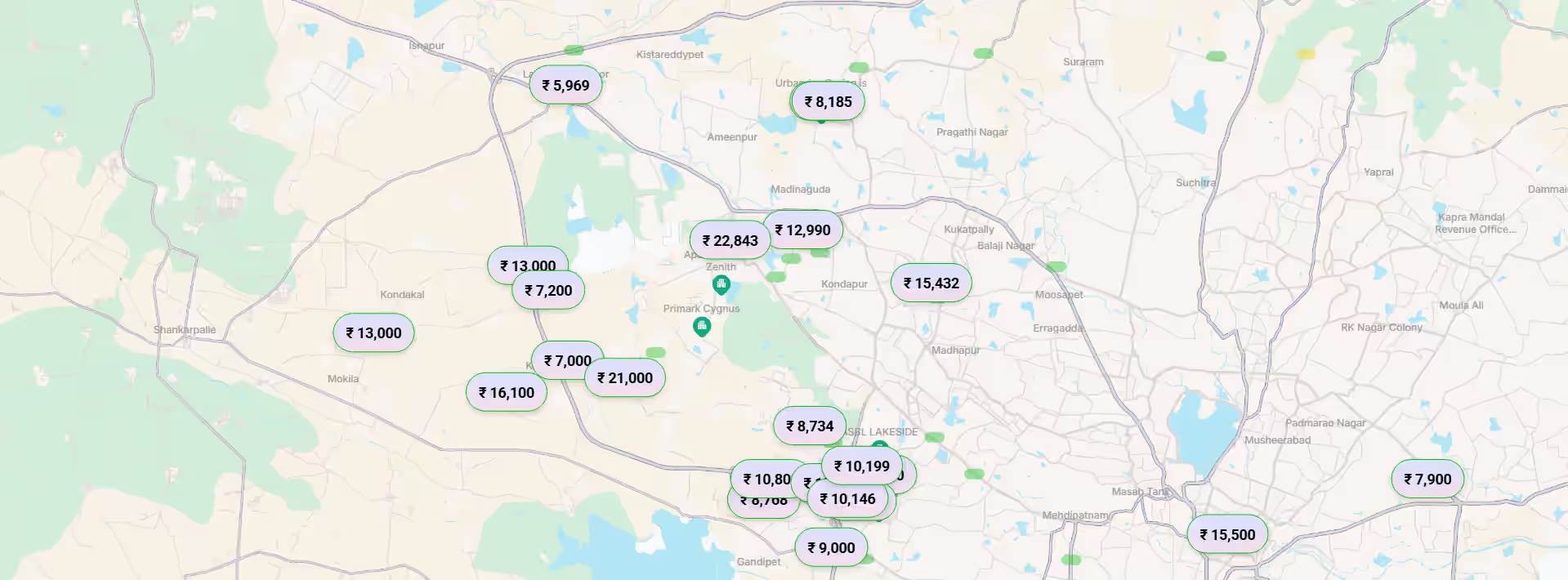
Hitech City Station: Properties within 1–2 km of the Hitech City MMTS station attract a strong premium. This station provides arguably the most direct rail access to the HITEC City IT cluster — with software employees being able to walk or take a 5-minute auto from the station to major campuses. Apartment prices in Madhapur and immediately adjacent pockets command ₹10,000–₹16,000 per sq ft, partly reflecting this transit premium.
Hafeezpet: A major residential hub served directly by MMTS, Hafeezpet offers a sweet spot of relative affordability (₹7,000–₹10,000 per sq ft for most projects) with direct MMTS access to both Hitech City and Secunderabad. It has seen consistent 12–14% annual appreciation.
Begumpet: One of the most established station catchment areas on the MMTS network. Being on the Lingampally–Secunderabad main line, Begumpet station provides access to both directions — making it extremely convenient for dual-commuter households. Commercial and residential premiums are well established here.
Medchal (Phase 2 beneficiary): The biggest new real estate story triggered by MMTS Phase 2. Medchal now has direct suburban rail connectivity to Secunderabad — dramatically improving its case as a residential investment destination for those who can tolerate the longer commute in exchange for significantly lower land and apartment prices.
Tellapur–RC Puram (Future beneficiary): With the proposed Tellapur–Ramachandrapuram MMTS extension part of the Phase 2 framework, the entire Osman Nagar–Tellapur belt stands to gain suburban rail connectivity that would add another layer of infrastructure-driven appreciation to an already fast-moving real estate market.
Tips for Daily MMTS Commuters
Buy a Monthly Pass: If you commute 20 or more days a month, a monthly season ticket or the TSRTC–MMTS combined pass will save significant money versus individual ticket purchases. Passes are available at major MMTS stations.
Use ATVM Machines: SCR has introduced ATVM machines at all MMTS stations for automatic ticketing, eliminating the need to stand in booking counter queues. Carry exact change or use the UTS app for paperless digital tickets.
Check Sunday Schedules Separately: Some MMTS services running between 11 AM and 3 PM are cancelled on Sundays. If you are planning a Sunday journey, verify the schedule in advance using the HYLITES app or the SCR official website.
Board at the Right Coach: Ladies coaches are designated. Vendors have designated coaches. General and First Class are at specific positions in the rake. Check station platform markings to board the correct coach and avoid last-minute rushes.
Peak Hour Planning: MMTS trains during the 7:30–9:30 AM and 5:30–8:00 PM windows are significantly more crowded. First Class travel is worth the premium if you need to ensure a seat during these hours.
Real-Time Updates: Download the HYLITES (Hyderabad Live Train Enquiry System) app for real-time MMTS station and train enquiry. The MMTS Train Timings Offline Android app provides downloadable timetables for planning without data connectivity.
Frequently Asked Questions About Hyderabad MMTS
Q: What does MMTS stand for in Hyderabad?
MMTS stands for Multi-Modal Transport System. It is a suburban commuter rail network operated by South Central Railway in partnership with the Telangana government, covering 90 km and 44 stations across Hyderabad and Secunderabad.
Q: What time does the first MMTS train start in Hyderabad?
The first MMTS trains begin as early as 4:00 AM on some routes (Lingampally to Umdanagar). The Falaknuma–Lingampally service begins at 5:00 AM. The Hyderabad Deccan–Lingampally service starts at 5:10 AM. Most routes have their first departure between 5:00 and 5:30 AM.
Q: What is the last MMTS train timing in Hyderabad?
The last trains run late into the night on some routes. The Falaknuma–Umdanagar train (47220) departs Falaknuma at 11:15 PM, arriving at Umdanagar at 12:45 AM. Most standard routes see their last departure between 9 PM and 11 PM depending on the specific route.
Q: How much does an MMTS ticket cost?
MMTS General class tickets start at ₹5 for journeys up to 10 km. The maximum General fare for journeys between 35–40 km is ₹11. First Class fares are approximately 12 times the General fare. A combined TSRTC–MMTS monthly pass costs around ₹800.
Q: Does MMTS go to Hitech City?
Yes. The Lingampally–Hyderabad and Lingampally–Secunderabad lines both stop at Hitech City (Madhapur) station, which is adjacent to the main HITEC City IT park. This is one of the most popular MMTS halts for IT professionals.
Q: What is MMTS Phase 2?
MMTS Phase 2 refers to the network expansion inaugurated on April 8, 2023 by Prime Minister Narendra Modi. It added the Secunderabad–Bolarum–Medchal route (28 km) and the Falaknuma–Umdanagar extension (12 km), expanding the total MMTS network to 90 km and 44 stations. Further extensions including a Shamshabad Airport link and Tellapur–RC Puram connection are proposed.
Q: How is MMTS different from the Hyderabad Metro?
MMTS is a South Central Railway-operated suburban train service running on existing Indian Railways tracks, with General class fares as low as ₹5. The Hyderabad Metro Rail is a fully elevated, high-frequency, air-conditioned metro system operated on dedicated tracks by HMRL, with fares ranging from ₹10 to ₹60. MMTS covers longer suburban distances at extremely low cost; Metro covers shorter urban hops with higher frequency and comfort.
Q: Is there a ladies special MMTS train?
Yes. The Matrubhumi Ladies Special runs on the Falaknuma–Lingampally route. Additionally, all MMTS trains have designated ladies-only coaches.
Conclusion: MMTS Is Hyderabad's Most Underrated Transit Asset
The Hyderabad MMTS is not glamorous. It does not have the shiny stations, real-time displays, and smartphone integrations of the Hyderabad Metro. But what it offers — reliable, affordable, suburban rail connectivity across 90 km and 44 stations for as little as ₹5 a trip — is arguably more transformative for a larger share of Hyderabad's population than any other transit system in the city.
For daily commuters, MMTS is the single best value-for-money transport option in the twin cities. For homebuyers and real estate investors, MMTS station proximity is a measurable, proven contributor to property appreciation — with localities like Chandanagar, Malkajgiri, and Hafeezpet demonstrating 45–130% price growth over five years, underpinned in part by transit connectivity. And for the city at large, the expansion of MMTS Phase 2 to Medchal and Umdanagar — with proposed further extensions toward Shamshabad Airport, Ghatkesar, and the western Osman Nagar–Tellapur belt — signals that suburban rail will be an increasingly important pillar of Hyderabad's urban mobility future.
Whether you board at Lingampally, Falaknuma, or Medchal — the MMTS is taking Hyderabad further, faster, and more affordably than most residents give it credit for.
Stay tuned to Assetscan.ai for the latest updates on Hyderabad's transit infrastructure, real estate corridor analysis, and investment intelligence across the city's fastest-growing micro-markets.
Sources
- Wikipedia — Hyderabad Multi-Modal Transport System: https://en.wikipedia.org/wiki/Hyderabad_Multi-Modal_Transport_System
- MMTS Trains (Official timetable resource): https://www.mmtstrains.com/
- MetroTrainTimings.in — MMTS Train Timings & Fare Details: https://www.metrotraintimings.in/Hyderabad/
- Rail Travels — MMTS Train Time Table: https://railtravels.org/mmts-train-time-table/
- 99acres — Hyderabad MMTS Timings, Route, Map, Station List, Fare 2024: https://www.99acres.com/articles/hyderabad-mmts.html
- TrainHelp.in — Hyderabad MMTS Suburban Local Train Time Table: https://www.trainhelp.in/hyderabad-mmts-local-train-time-table/
- Hyderabad Metro Rail Timings — MMTS Phase 2 Route Map: https://hyderabadmetrorailtimings.com/mmts-phase2-route-map.php
- South Central Railway Official Website: https://scr.indianrailways.gov.in/
- Maps of India — Hyderabad MMTS Route Map: https://www.mapsofindia.com/maps/telangana/hyderabad-mmts-route-map.html
Disclaimer: MMTS train timings are subject to revision by South Central Railway. Always verify schedules on the official SCR website (scr.indianrailways.gov.in), the HYLITES app, or by calling the railway enquiry number 139 before planning your journey. Fares mentioned are based on the most recently published SCR data and may change.

